| Coin And Feather Demonstration – MAS 4110
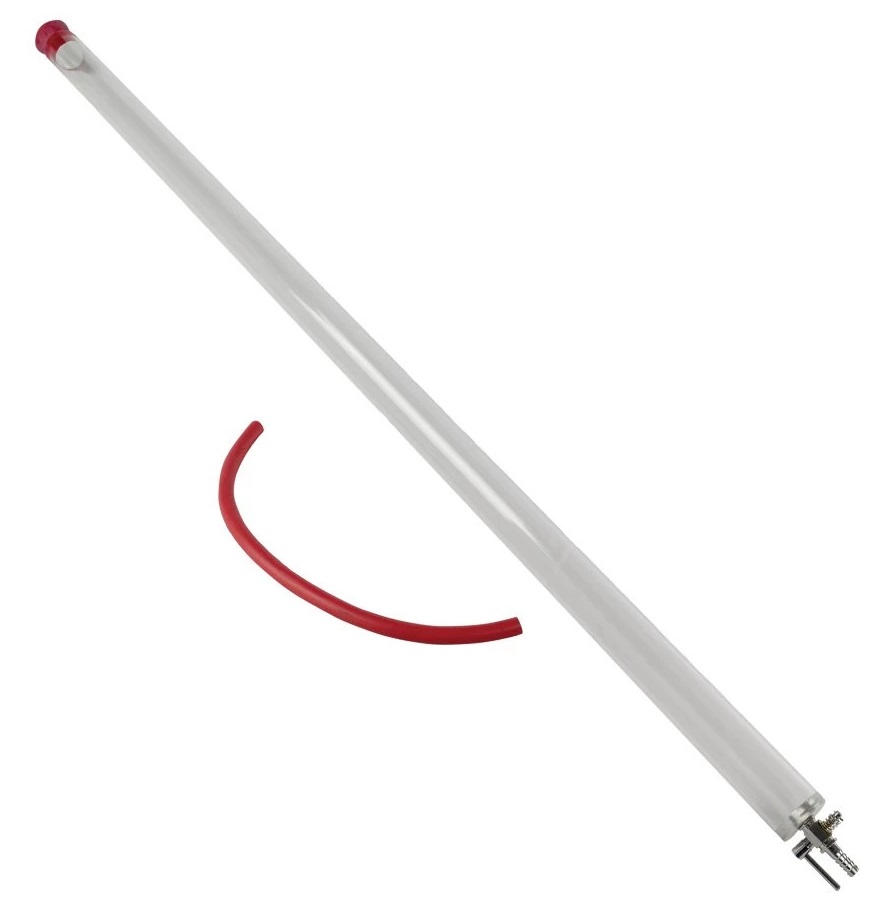
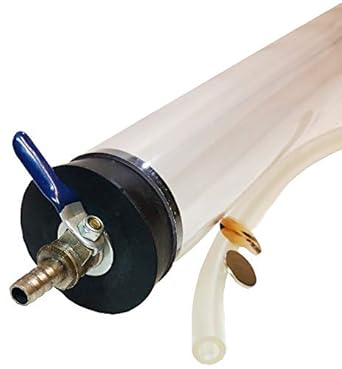
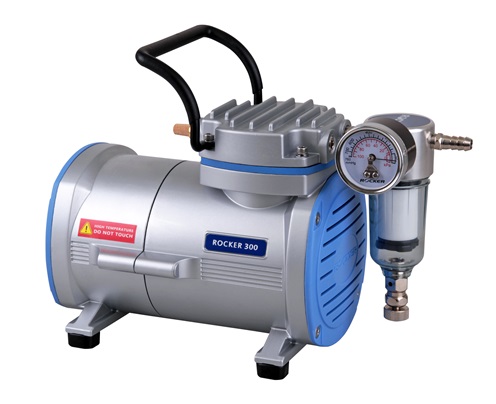
Answers the Question- Do heavier objects fall faster than lighter objects? Easy to set up and economically priced, our Coin & Feather Demo can be used to perform the classic experiment of a lighter object falling at the same rate as a heavier object when air resistance is removed from the equation. The demo includes a metal disk, a feather and a transparent free fall tube. The tube easily mounts on a ring stand with a clamp (not included) or can be held by a student. The acrylic tube is 100cm long and 3.75cm in diameter and is equipped with an evacuating valve. Any electric vacuum pump that reaches 24-27hg can be used. We recommend our Electric vacuum pump to work with the Coin & Feather demo. |
|
|
The Guinea and Feather is one of the most important experiments in classical physics and it is still performed today as a lecture demonstration for thousands of introductory physics students. It shows that the Earth’s gravity accelerates all objects equally, regardless of mass i.e. that a heavy object (a British guinea) and a light object (a feather) will fall at exactly the same rate. This concept of uniform gravitational acceleration was proposed by Galileo Galilei (1564-1642) and directly contradicted the previous claim by Aristotle (384-322 B.C.) that heavier objects fall faster. Of course if you drop a coin and a feather under normal (atmospheric) conditions, the coin will hit the ground first. But Galileo reasoned that there was another force at work slowing down the feather. That force was air resistance and Galileo claimed that under conditions without air resistance, all objects would accelerate equally. Unfortunately the techniques for creating a sufficient vacuum did not exist at the time to prove Galileo correct.Isaac Newton (1643-1727) proved mathematically that Galileo was correct. Newton’s law of universal gravitation states that the attraction between two objects M and m placed a distance r apart (from center to center) is given by F = GMm/r2 , where G is the gravitational constant. But Newton’s second law states that the force (F) on an object (m) is related to it’s acceleration (a) by F = ma. Combining these two equations we get F = GMm/r2 = ma, or a = GM/r2. Thus, the gravitational acceleration of an object is only dependent on the mass of the Earth (M), it’s distance from the Earth’s center (r), and the gravitational constant G. We call this acceleration due to gravity g to distinguish it from acceleration due to some other force. The precise value of g varies with location and the local Earth density, but standard gravity is defined as g = 9.80665 m/s2. |
 |
|
| Electric Vacuum Pump, Oil Free, Rocker 300 – MAS 4123
Connecting Tube 1 Meter roll – MAS 1102 |
 |