
This kit contains everything you need to collect and monitor the pH of rainwater or potentially acidic freshwater sources. Each kit includes enough materials for an entire class—15 sample tubes with caps, 1 pH paper packs with color comparison charts and enough test paper for over 100 determinations. Also included is a vial of MAS Scientific 0–14 pH test paper for testing and comparing the pH values of other liquids. All components are completely portable for use in the field.
Correlation to Next Generation Science Standards (NGSS)†
Science & Engineering Practices
Developing and using models
Obtaining, evaluation, and communicating information
Analyzing and interpreting data
Follow below links for articles
https://onlinelibrary.wiley.com/doi/full/10.1002/tea.21401
https://onlinelibrary.wiley.com/doi/abs/10.1111/ssm.12145
https://www.tandfonline.com/doi/abs/10.1080/1046560X.2017.1415616
Disciplinary Core Ideas
The Roles of Water in Earth’s Surface Processes
Natural Hazards
Structure and Properties of Matter
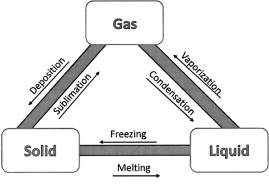
The three classical states, solid, liquid, and gas of matter, can be distinguished macroscopically in terms of the properties of density, compressibility, and rigidity related to the motion of atoms or molecules.
Human Impacts on Earth Systems
Earth’s Materials and Systems
Natural Resources
Crosscutting Concepts
Patterns
Cause and effect
Systems and system models
Performance Expectations
Develop a model to describe the cycling of water through Earth’s systems driven by energy from the sun and the force of gravity.
Apply scientific principles to design a method for monitoring and minimizing a human impact on the environment.
Analyze geoscience data to make the claim that one change to Earth’s surface can create feedbacks that cause changes to other Earth systems.
Plan and conduct an investigation of the properties of water and its effects on Earth materials and surface processes.
Evaluate or refine a technological solution that reduces impacts of human activities on natural systems.
The three classical states, solid, liquid, and gas of matter, can be distinguished macroscopically in terms of the properties of density, compressibility, and rigidity related to the motion of atoms or molecules.