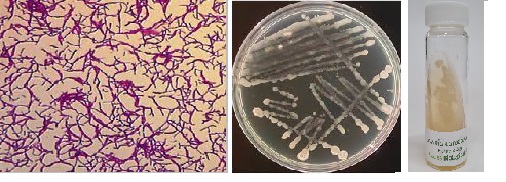
The Gram-positive bacterium Bacillus megaterium represents an increasingly used alternative for high yield intra- and extracellular protein synthesis.
Bacillus megaterium is a rod-like, Gram-positive, mainly aerobic spore forming bacterium found in widely diverse habitats. With a cell length of up to 4 µm .
Bacillus megaterium is a spore-forming bacterium found in soil, seawater, sediments, rice paddies, dried food, honey, and milk
The most common food associated with Bacillus cereus is rice. It may also be found in other foods such as: pasta. corn flour.
Yakult is a probiotic health drink, which contains more than 8 billion beneficial bacteria (Lactobacillus casei strain Shirota). Many scientific papers have been published and there are many evidences that the bacteria in Yakult are resistant to gastric juices and bile and reach the intestine alive.
The primary bacterium associated with food poisoning related to rice is Bacillus cereus. This bacterium is often present in starchy foods like rice, and it can produce toxins that cause both diarrheal and emetic (vomiting) symptoms.
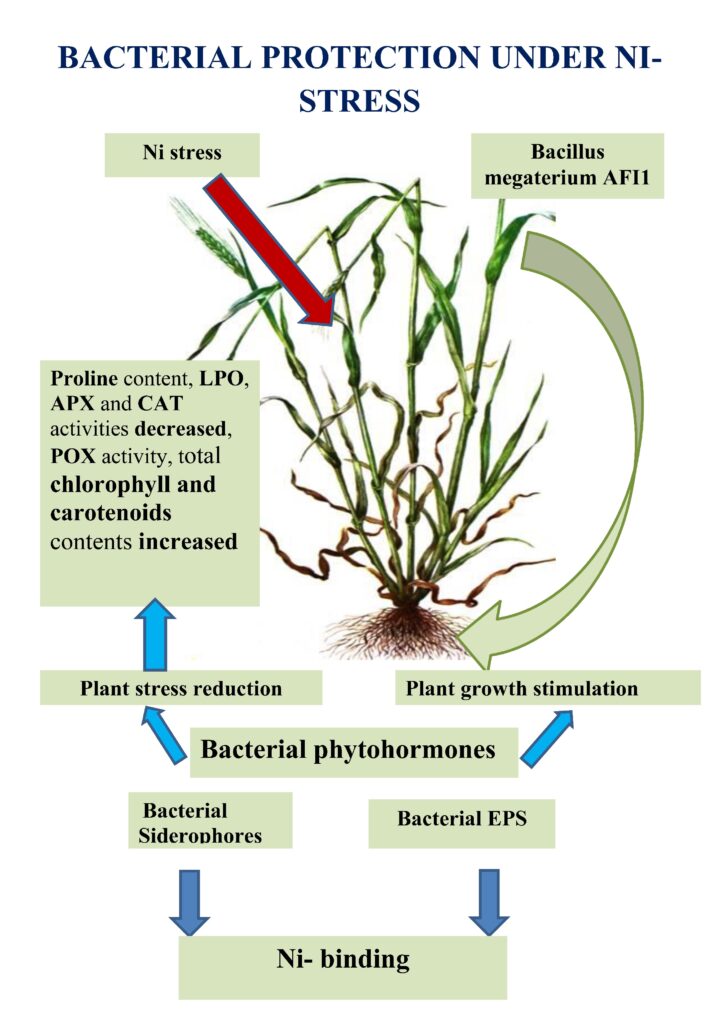
Simple Summary. Probiotics play a vital role in animal production. Bacillus megaterium 1259, as a novel bacterium, has been used as a probiotic in poultry feed.
The characteristics of Bacillus megaterium strain ATCC 14581 make it suitable for use in various applications, including wastewater treatment, bioremediation and biodegradation, cleaning and deodorizing, drain and septic treatment as well as enzyme and chemical production
Although anthrax remains the best-known Bacillus disease, in recent years other Bacillus species have been increasingly implicated in a wide range of infections including abscesses, bacteremia/septicemia, wound and burn infections, ear infections, endocarditis, meningitis, ophthalmitis, osteomyelitis, peritonitis,
To prepare a culture of Bacillus megaterium, you’ll need to use a medium that allows it to grow and multiply, typically a liquid medium like nutrient broth or a solid medium like nutrient agar. After the culture is established, it should be maintained by subculturing into fresh medium every two to three weeks.
Here’s a more detailed guide:
- 1. Choose a suitable medium:
- Liquid medium (nutrient broth): This is a common choice for growing B. megaterium. It provides the necessary nutrients for growth, including carbohydrates, amino acids, and minerals.
- Solid medium (nutrient agar): Agar is a polysaccharide derived from seaweed that, when mixed with nutrient broth, solidifies the medium. This allows you to grow individual colonies for isolation or observation.
- 2. Sterilize the medium:
- Autoclaving: Sterilize the medium by autoclaving it at 121°C (250°F) and 15 psi for 15 minutes to kill any existing microorganisms.
- Alternatively, filter sterilization: For heat-sensitive components of the medium, filter sterilization can be used. Pass the medium through a filter with a pore size of 0.22 µm to remove microorganisms.
- 3. Inoculate the culture:
- Seed culture: If you’re starting from a freeze-dried or stored culture, you’ll need to prepare a seed culture first. This involves picking a colony from the stored culture and transferring it to a flask of sterile nutrient broth.
- Incubate: Incubate the seed culture under optimal conditions for B. megaterium growth (usually around 30°C and 150 rpm on a shaker) for 24 hours, or until the culture has grown to a sufficient density.
- Main culture: Inoculate your chosen medium (nutrient broth or agar) with a small amount of the seed culture. This will initiate the growth of the B. megaterium.
- 4. Incubate the culture:
- Temperature: Incubate the culture at the appropriate temperature for B. megaterium, which is typically around 30°C.
- Shaking: For liquid cultures, use a shaker to ensure adequate aeration and mixing of the medium.
- Observation: Monitor the culture for growth and development of colonies.
- 5. Subculturing:
- Maintain viability: To maintain a healthy and viable culture, you should subculture it regularly. This means transferring a small amount of the existing culture to fresh medium.
- Frequency: Subculture the culture every two to three weeks to prevent the bacteria from aging and losing viability.
Important considerations:
- Aseptic technique: Practice good aseptic technique to prevent contamination of your culture.
- Safety: Bacillus megaterium is generally considered non-pathogenic, but it’s still important to handle it with care.
- Optimization: You may need to optimize the culture conditions (medium composition, incubation temperature, shaking speed) based on your specific needs and goals.
By following these steps, you can successfully prepare and maintain a culture of Bacillus megaterium for your research or other applications.
The Gram-negative bacterium Escherichia coli is the most widely used production host for recombinant proteins in both academia and industry. The Gram-positive bacterium Bacillus megaterium represents an increasingly used alternative for high yield intra- and extracellular protein synthesis. During the past two decades, multiple tools including gene expression plasmids and production strains have been developed. Introduction of free replicating and integrative plasmids into B. megaterium is possible via protoplasts transformation or transconjugation. Using His6– and StrepII affinity tags, the intra- or extracellular produced proteins can easily be purified in one-step procedures. Different gene expression systems based on the xylose controlled promoter PxylA and various phage RNA polymerase (T7, SP6, K1E) driven systems enable B. megaterium to produce up to 1.25 g of recombinant protein per liter. Biomass concentrations of up to 80 g/l can be achieved by high cell density cultivations in bioreactors. Gene knockouts and gene replacements in B. megaterium are possible via an optimized gene disruption system. For a safe application in industry, sporulation and protease-deficient as well as UV-sensitive mutants are available. With the help of the recently published B. megaterium genome sequence, it is possible to characterize bottle necks in the protein production process via systems biology approaches based on transcriptome, proteome, metabolome, and fluxome data. The bioinformatical platform integrates obtained theoretical and experimental data.
Bacillus megaterium, a spore-forming bacterium, can be collected from various environments including soil, seawater, sediments, rice paddies, honey, and dried food, according to the National Institutes of Health (NIH). It’s also found in water, plant material, soil, and dust, according to ScienceDirect. In a specific study, B. megaterium was isolated from shrimp farming ponds in Vietnam according to Wiley Online Library.
Elaboration:
- Soil:B. megaterium is frequently found in soil, both generally and specifically in rice paddies according to the National Institutes of Health (NIH).
- Seawater and Sediments:The bacterium can also be isolated from aquatic environments, such as seawater and sediments according to the National Institutes of Health (NIH).
- Food:B. megaterium is a common contaminant of food, particularly heat-treated or retorted foods, and can be found in dried foods, honey, and even milk according to the National Institutes of Health (NIH).
- Other Environments:It has also been isolated from various other locations, including shrimp farming ponds, and even from plant material, dust, and water according to Wiley Online Library.
Important Considerations:
- Aseptic Technique:When collecting samples, it’s crucial to follow good microbiological practices to avoid contamination of the sample according to Flinn Scientific.
- Isolation and Cultivation:Once collected, B. megaterium can be isolated and cultivated using various methods, including enrichment culture techniques according to RJPBCS.
- Strain ATCC 14581:A specific strain of B. megaterium, ATCC 14581, is commonly used in research and is available from the American Type Culture Collection (ATCC).