SKU: 80467
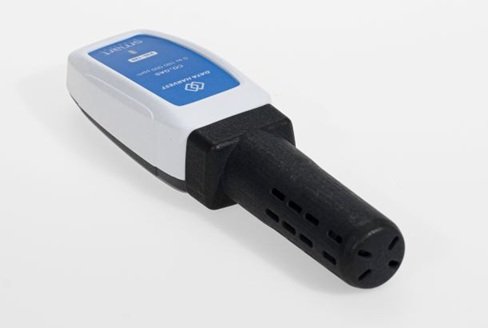
Wireless Carbon Dioxide Sensor – CO₂ Monitoring for Biology & Environmental Science (Code 80467)
Wireless Carbon Dioxide Sensor is a high-precision environmental science tool designed to measure and monitor carbon dioxide (CO₂) levels in air over time. It allows students to investigate how CO₂ concentrations change in different biological and environmental processes.
This sensor is ideal for studying respiration, photosynthesis, and gas exchange. It includes a Nalgene containment bottle, enabling controlled experiments with plants and small organisms in a sealed environment so that changes in CO₂ concentration can be accurately recorded.
By collecting real-time data, students can observe how biological activity directly affects atmospheric carbon dioxide levels, linking classroom science to global environmental systems such as the carbon cycle.
Note: This sensor is designed for gaseous measurements only and is not suitable for use in water.
Key Features
- Measures carbon dioxide (CO₂) concentration in air
- Monitors changes in CO₂ levels over time
- Includes Nalgene bottle for controlled environment experiments
- Suitable for studying plants and small organisms
- Wireless operation for flexible classroom investigations
- Supports real-time data logging and analysis
- Designed for gas-phase measurements only (not for liquids)
Perfect for KS3, GCSE, A-Level biology, chemistry, and environmental science courses, this sensor supports hands-on investigations into gas exchange and environmental change.
- Investigating photosynthesis and respiration
- Exploring the carbon cycle and greenhouse gases
- Measuring gas exchange in plants and organisms
- Studying environmental changes in CO₂ levels
- Developing skills in data logging and scientific analysis
Reliable, engaging, and highly relevant, the Data Harvest Wireless Carbon Dioxide Sensor helps students understand the role of CO₂ in biological systems and global environmental processes.