| Cat # MAS 583
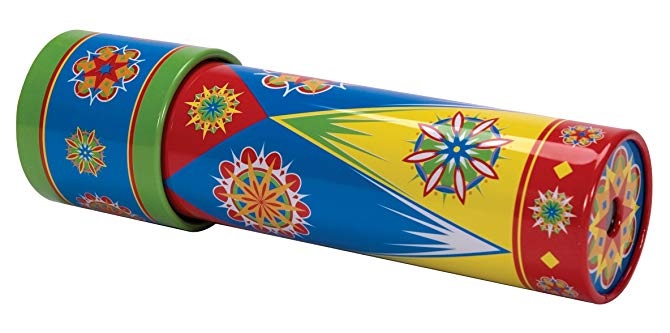
kaleidoscope is an optical instrument with two or more reflecting surfaces tilted to each other in an angle, so that one or more (parts of) objects on one end of the mirrors are seen as a regular symmetrical pattern when viewed from the other end, due to repeated reflection. The reflectors (or mirrors) are usually enclosed in a tube, often containing on one end a cell with loose, colored pieces of glass or other transparent (and/or opaque) materials to be reflected into the viewed pattern. Rotation of the cell causes motion of the materials, resulting in an ever-changing view being presented. |
 |
| Reflective symmetry has been observed since ancient times. Legend claims that early Egyptians would place two or three slabs of highly polished limestone together at different angles and watch with fascination as mandalas were formed by human dancers. It was not until centuries later, however, that this optical phenomenon was encased in one small tube and given a name. The kaleidoscope was invented and exhibited in 1816 by Sir David Brewster. (The patent would be granted in 1817.) | 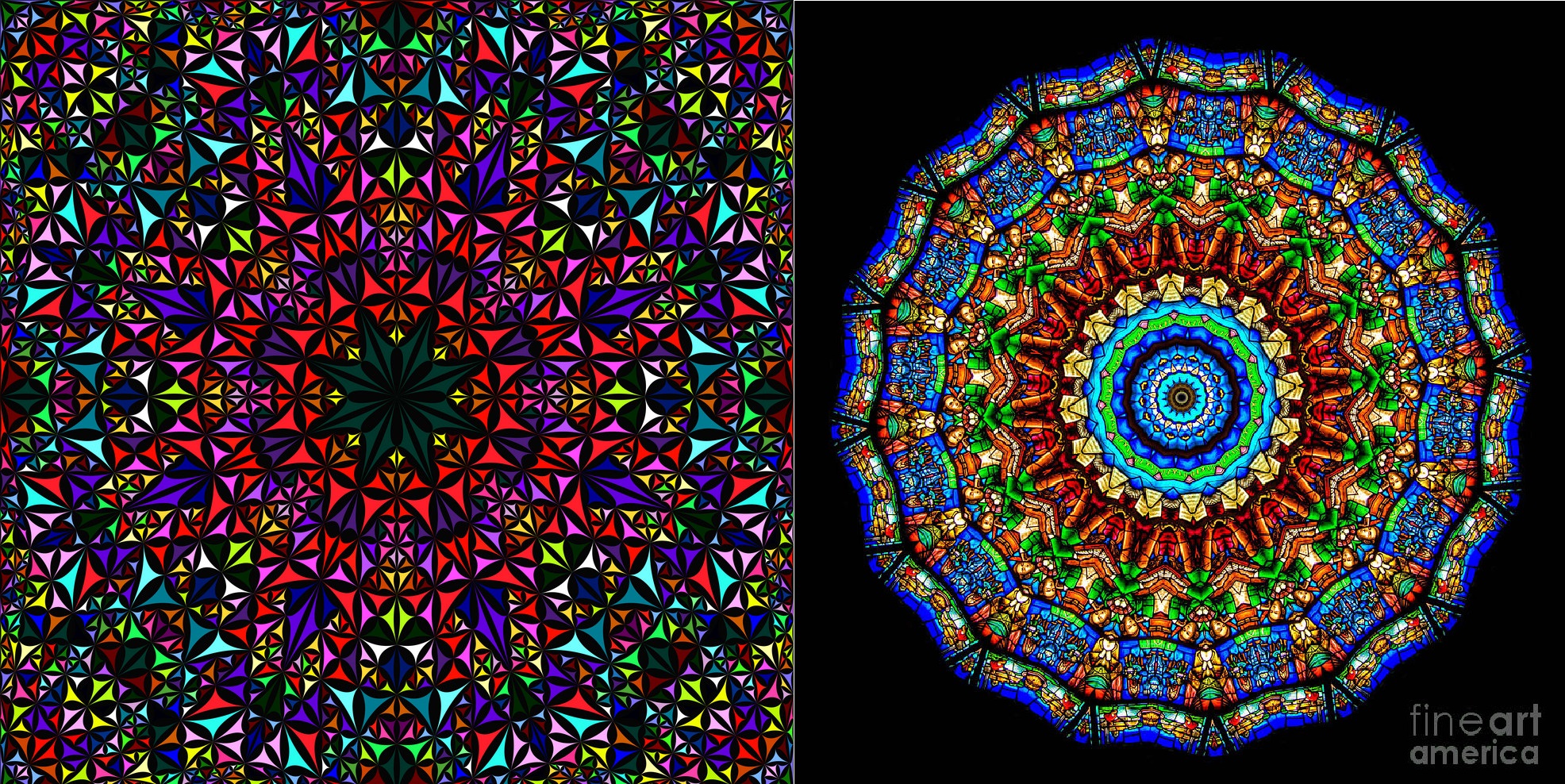 |